
Is Photographic Memory Real
Introduction: Understanding the Idea Behind “Is Photographic Memory Real”
The question “is photographic memory real” continues to attract attention across science, education, and popular culture. Many people imagine a mind that can store and recall images with perfect clarity, like a camera. Yet when examined through the lens of modern cognitive science, the answer becomes more nuanced. Researchers distinguish between myth, rare phenomena, and measurable memory capabilities.
This page explores whether photographic memory exists, how it differs from related concepts, and what science currently confirms. It also addresses commonly searched questions such as how memory works, whether it can be trained, and what examples exist in real life.
What Is Photographic Memory?
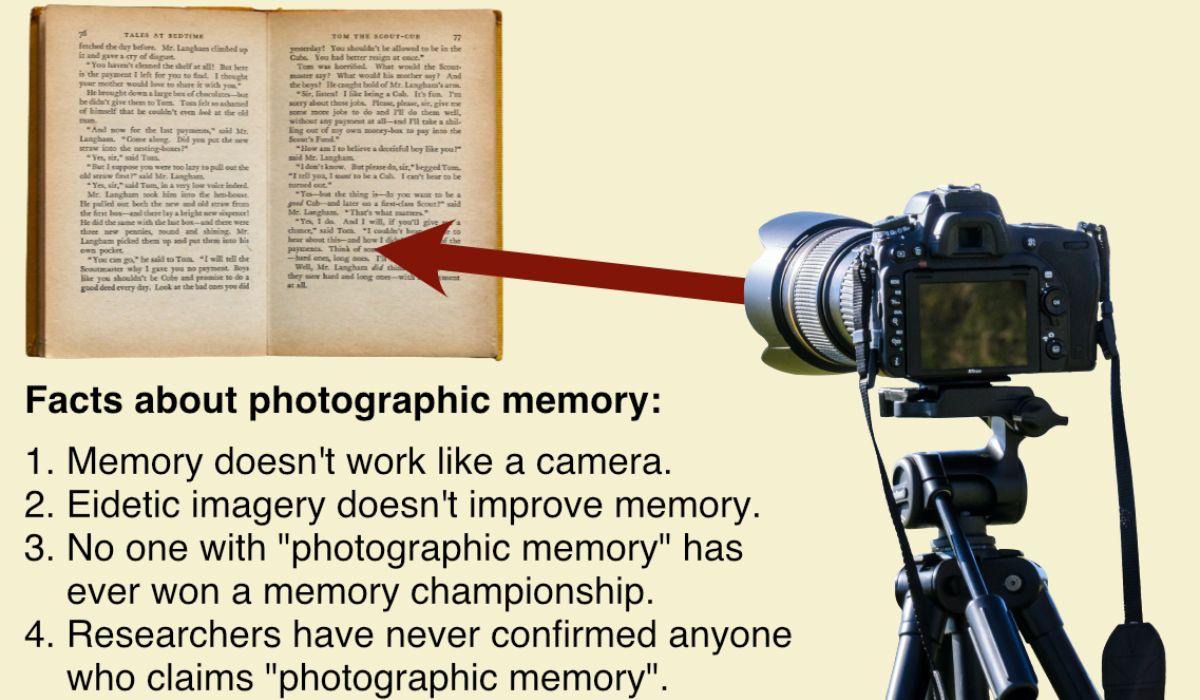
Photographic memory is often described as the ability to recall visual information with complete accuracy after only brief exposure. In theory, a person could look at a page of text and later reproduce it perfectly.
However, scientific literature does not support the existence of true photographic memory in adults. Instead, researchers refer to a phenomenon called eidetic memory, which is sometimes observed in children.
Key Distinction:
- Photographic memory: Perfect, permanent recall (largely unproven)
- Eidetic memory: Temporary, vivid recall (scientifically documented but rare)
Is Photographic Memory Real According to Science?
The short answer: there is no verified evidence that true photographic memory exists.
Studies in cognitive psychology show that human memory is reconstructive rather than exact. Even individuals with exceptional recall rely on mental frameworks, associations, and pattern recognition.
What Research Shows:
- Memory is influenced by attention, emotion, and context
- Recall is often reconstructed, not replayed like a video
- Even highly trained individuals make errors under testing
This means the idea behind “is photographic memory real” leans more toward misconception than measurable reality.
What Is Eidetic Memory and How Is It Different?
Eidetic memory is the closest scientifically accepted phenomenon to photographic memory.
People with eidetic imagery can briefly retain detailed visual impressions after the stimulus is gone. However, this ability:
- Lasts only seconds to minutes
- Is more common in children than adults
- Fades with age and cognitive development
Unlike the popular idea of photographic memory, eidetic recall is not perfect or permanent.
Can People Train Their Memory to Be Like Photographic Memory?
While you cannot develop true photographic memory, you can significantly improve recall using structured techniques.
Proven Memory Techniques:
- Method of loci (memory palace)
- Chunking information
- Spaced repetition systems
- Visualization and association
Memory champions—often featured in competitions—demonstrate extraordinary recall. However, their abilities are the result of training, not innate photographic memory.
Real-Life Examples Often Mistaken for Photographic Memory
Certain individuals are frequently described as having photographic memory, but closer analysis reveals different explanations.
Examples Include:
- People with highly superior autobiographical memory (HSAM)
- Savants with exceptional recall in specific domains
- Scholars or performers with trained memorization skills
These cases reinforce that exceptional memory exists—but not in the literal photographic sense.
How Memory Actually Works
Understanding how memory functions helps clarify why photographic memory is unlikely.
The Three Core Stages:
- Encoding – Processing incoming information
- Storage – Maintaining information over time
- Retrieval – Accessing stored information
Each stage is influenced by:
- Focus and attention
- Emotional relevance
- Repetition and reinforcement
This complex process differs significantly from the idea of a static, perfectly preserved mental image.
People Also Ask: Answering Common Queries
Is photographic memory real or a myth?
It is largely considered a myth. While some individuals have exceptional recall, there is no scientific proof of perfect photographic memory.
Do any adults have photographic memory?
There are no verified adult cases. What appears to be photographic memory is typically advanced mnemonic skill.
Can children have photographic memory?
Some children exhibit eidetic memory, but it is temporary and fades with age.
How rare is eidetic memory?
It is uncommon and mostly observed in young children under controlled conditions.
Can you improve memory to that level?
You can improve recall significantly, but not to the level of perfect photographic reproduction.
Cognitive Science Perspective on “Is Photographic Memory Real”
Modern neuroscience emphasizes adaptability over perfection. The brain prioritizes meaning and patterns rather than exact duplication.
Research using brain imaging shows that:
- Memory recall activates reconstructive neural pathways
- Visual memory integrates with language and emotion centers
- Errors in recall are a natural part of cognition
These findings further explain why photographic memory remains unsupported.
Applied Memory in Real-World Contexts
Memory plays a crucial role in everyday tasks—from studying to navigation. Even in environments requiring precision, such as museums or historical archives, professionals rely on systems rather than raw recall.
For example, visitors exploring institutions like the British Museum or navigating exhibitions at the Science Museum often use guides, notes, and digital tools rather than memory alone.
Similarly, during large-scale events such as the Notting Hill Carnival, logistical planning depends on structured coordination—not individual memory capacity.
This demonstrates that even in knowledge-rich environments, systems outperform reliance on perfect recall.
Memory, Travel, and Experience: A Practical Insight
When visiting cities like London, travelers often assume they will remember everything they see—from landmarks to routes. In reality, memory benefits from reinforcement.
Practical Tips:
- Take notes during visits to Tower of London
- Use maps when navigating areas near Covent Garden
- Capture key details instead of relying on recall alone
Even experienced travelers rely on tools, highlighting the limits of natural memory.
Final Verdict: Is Photographic Memory Real?
The evidence leads to a clear conclusion:
- True photographic memory, as popularly imagined, is not real
- Eidetic memory exists but is limited and temporary
- Exceptional memory is achievable through training, not innate perfection
Understanding this distinction helps set realistic expectations and encourages practical strategies for improving memory.
Conclusion
The question “is photographic memory real” reflects a broader curiosity about human potential. While the idea is compelling, science consistently shows that memory is dynamic, adaptive, and imperfect.
Rather than seeking perfect recall, the focus should shift toward developing effective memory techniques and understanding how cognition works. This approach offers measurable benefits in education, work, and daily life.