
Have you ever opened your phone on a Wednesday morning and found a warm message from a friend? Maybe it was a little sunrise photo with a kind line across the top. It’s a small thing, but it can turn a heavy start into a lighter one.
By the middle of the week, the excitement of Monday has worn off and the weekend still feels far away. That’s exactly why a thoughtful greeting matters so much. In this guide, we’ll walk through why these small messages work, what kinds of lines you can use, how to pair them with pictures, and how to share them without sounding forced. You’ll find plenty of original lines you can borrow, along with practical ideas for making your own.
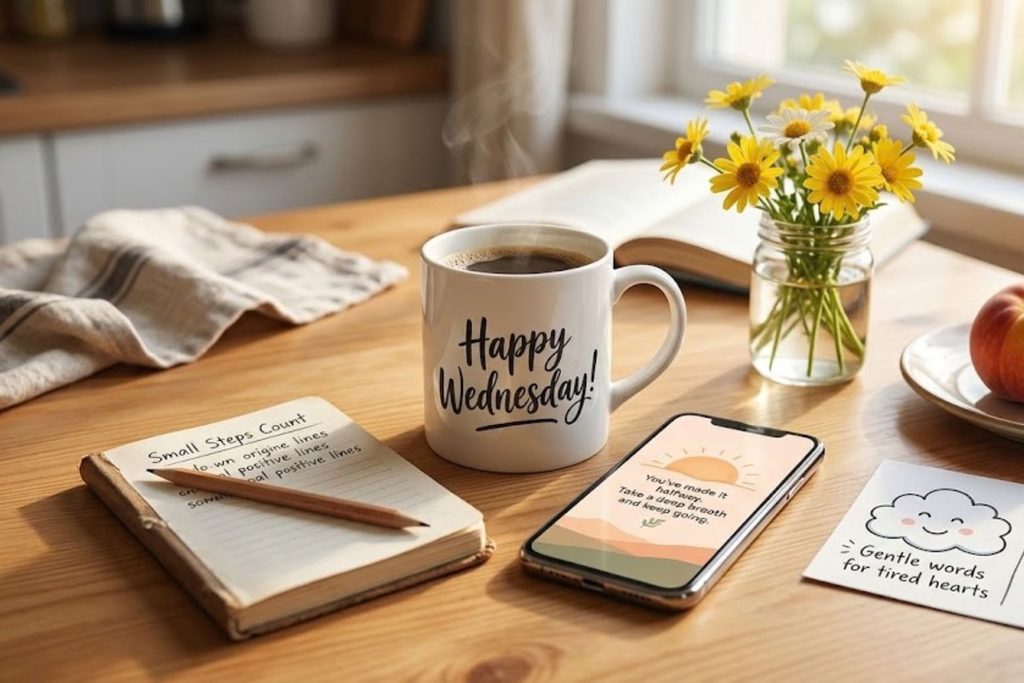
Why the Middle of the Week Deserves Its Own Kind of Cheer
The Hump Everyone Feels
Think of your week as a long hike. Monday is the trailhead, where you’re fresh and your boots are clean. Friday is the summit, with the view and the sandwich you’ve been promising yourself. Wednesday is the steep, dusty middle, where your legs ache and you can’t see the top yet.
That’s why this day carries such a particular mood. You’ve already spent your first burst of energy, but the finish line isn’t close enough to pull you forward. A kind word at this point works like a water bottle handed over by a fellow hiker.
A Natural Pause for Reflection
The middle of the week is also a handy checkpoint. You can look back at what you’ve done since Monday and ask what still needs your attention. Instead of dreading what’s left, you can treat the day as a gentle reset.
Why People Love Sending Greetings Now
Many people feel the same dip, so a cheerful note lands well. It says, “I see you, and we’re in this together.” You don’t need a special occasion, just a little thoughtfulness.
The Psychology Behind a Good Morning Message
Small Gestures, Big Mood Shifts
Why does a simple line of text matter? Our brains respond strongly to feeling remembered. When someone takes a moment to think of us, even briefly, we feel connected. That feeling can lift our mood for hours.
The Power of Starting Positive
The first thing we read in the morning tends to set our tone. If your first scroll is full of bad news and worries, your mind starts the day braced for trouble. A calm, hopeful line gives you a gentler start, a bit like opening a window before you start cleaning a stuffy room.
Why Pictures Add Extra Weight
Words reach the mind, but images reach the feelings. A soft golden sky or a steaming cup of tea can say “slow down and breathe” before you’ve read a single word. That’s why the pairing of text and photo is so popular. Each one supports the other, and together they feel more complete than either alone.
Short and Sweet: Lines That Fit in a Single Breath
Sometimes you just want something quick. These shorter lines work well when you’re messaging a busy coworker or posting a story.
Brief Wishes for Any Reader
- “Halfway there. Take a deep breath and keep going.”
- “Today is a fresh page, so write something kind on it.”
- “You’ve already climbed half the hill. Enjoy the view.”
- “Let this morning be gentle with you.”
- “Small steps still count. Take one today.”
- “The week is turning in your favor.”
Why Short Lines Work
A short line is easy to read in a few seconds and easy to remember. It also leaves room for a picture to do the talking. If you’ve ever tried to read a long paragraph on a tiny phone screen while waiting for the bus, you already know why brevity wins.
When to Choose Brevity
Pick a short line when the person is probably rushed, such as a friend heading to work or a relative getting kids ready for school. A long speech at that hour can feel like one more thing to deal with.
Motivational Lines to Push You Through the Hump
Words for Hard Workers
When the to-do list feels endless, a little push helps. Here are some original lines you can use or adapt:
- “You don’t need to be perfect today. You just need to begin.”
- “Every task you finish is a brick in something you’re building.”
- “Tired is not the same as finished. Rest a moment, then rise.”
- “The middle of the road is where the strongest legs are made.”
- “Your effort this morning is a gift to your future self.”
Words for Students
Midweek can be rough if you’ve got exams or deadlines. Try:
- “Questions mean you’re learning. Keep asking.”
- “A little study today is a lot less stress tomorrow.”
- “You’re allowed to be a beginner at something new.”
How to Use Them Well
Motivation works best when it sounds like a friend, not a drill sergeant. Skip the loud, bossy tone and go for something warm. Nobody wants to be shouted at before breakfast, do they?
Gentle Words for Tired Hearts
Not every Wednesday is a high-energy day. Some mornings, people are quietly carrying worries, grief, or plain exhaustion. In those moments, cheerful slogans can feel hollow.
Comfort Without Pressure
Try lines that offer company rather than demands:
- “If today feels heavy, you don’t have to carry it all at once.”
- “Be as kind to yourself as you would be to a dear friend.”
- “It’s okay to move slowly. Slow still gets there.”
- “Even cloudy mornings turn into afternoons.”
- “You are doing better than you think.”
Why Softness Matters
Imagine someone standing in the rain who is handed an umbrella instead of being told the sun will come out. The umbrella is practical and caring. Gentle messages work the same way, because they meet people where they are.
Know Your Reader
If you know the person is going through something hard, keep it short and sincere. A simple “thinking of you this morning” can mean more than a polished quote.
Faith, Gratitude, and Blessing-Style Messages
For many people, mornings begin with prayer, reflection, or a moment of thanks. Messages with a spiritual or grateful tone can be deeply meaningful.
Gratitude Lines
- “Be thankful for the breath in your chest and the light in your window.”
- “A grateful heart finds something to smile about before breakfast.”
- “Count three good things before you check your phone.”
- “Today is a gift. Open it slowly.”
Blessing-Style Wishes
- “May your path be smooth, your heart be light, and your day be full of small mercies.”
- “Wishing you peace in the morning and strength in the afternoon.”
- “May the people you meet today be kind to you.”
Keeping It Inclusive
If you’re sending messages to a mixed group, such as coworkers or a large social following, you might lean on general words like peace, hope, and thankfulness. That way everyone can feel included, no matter their background or beliefs. If you’re writing to someone who shares your faith, feel free to be more personal.
Funny and Lighthearted Midweek Greetings
Humor is one of the best ways to beat a dull mood. Laughter makes the day feel lighter before it’s even begun.
Playful Lines to Try
- “Good morning! The coffee is strong, and so are you.”
- “It’s the middle of the week, which means we’re officially on the downhill side of the uphill.”
- “Today’s forecast: a 90% chance of snacks.”
- “Wake up, stretch, and pretend you’ve got everything under control.”
- “If the week were a sandwich, today is the filling. Make it tasty.”
Using Humor Wisely
Good jokes are gentle. They poke fun at the shared struggles of work and sleep, not at a person. Be careful with sarcasm in text, because the tone can get lost, and a joke meant to cheer someone up may land the wrong way.
Pairing Humor with Pictures
Funny lines pair beautifully with cartoon-style drawings, sleepy animals, or a mug with a silly face. A cat squinting at the morning sun is practically a classic, and you can see why. It says what we’re all feeling.
Picture Ideas That Make a Message Shine
Nature Scenes
Nature is the old favorite for good reason. Think soft sunrises, dewy leaves, misty hills, and quiet lakes. These images calm the eye and suggest new beginnings. A garden path or a field of wildflowers adds a sense of gentle motion.
Cozy Morning Moments
Steam rising from a cup of tea, a window with pale light, a half-open book, or a plate of warm toast can all tell a story. They feel personal and relaxed, as if you’re inviting the viewer to sit down with you.
Flowers and Colors
Fresh blooms bring instant brightness. Yellow and orange tones feel energetic, while pale pinks and blues feel peaceful. Matching the color mood to your message helps the whole picture feel connected.
Illustrated and Minimalist Styles
Not every graphic needs to be a photograph. Hand-drawn doodles, simple shapes, and soft watercolor backgrounds look charming and are easier to read. A plain background with a single line of text can be strikingly effective.
Choosing the Right Mood
Ask yourself what the reader needs. Is it energy, calm, a laugh, or a hug? Let that answer guide your choice of picture, the same way you’d choose a gift for a friend.
How to Make Your Own Shareable Graphics
You don’t have to be a designer. Making a pretty card at home is easier than most people expect.
Start With a Good Photo
Take your own picture whenever you can. A snapshot of your morning window, your garden, or your breakfast table feels more genuine than a stock-style image. If you use pictures from the internet, check that they’re free to use, and give credit where it’s asked for.
Pick Readable Text
Choose a clear, simple font. Fancy swirling letters look lovely but can be hard to read on a small screen. Make the words big enough to read at a glance, and keep the lines short.
Mind the Contrast
White text on a dark or busy background often disappears. A soft shaded layer behind the words, or a calm area of the photo such as open sky, helps the message stand out.
Keep It Simple
Think of your card as a postcard, not a poster. One line, one picture, and a little breathing room is all you need. Too many details crowd the page and tire the eye.
Use Free Tools
Many free apps and websites offer ready-made templates where you just swap the text and photo. Your phone’s built-in editor can also add text, crop, and adjust brightness in seconds.
Sharing the Warmth: Who, When, and Where
Family and Close Friends
These are the easiest people to share with, because they already know your style. Personal touches, like a nickname or a mention of something you share, make the message special.
Coworkers and Teams
A small, uplifting note in a team chat can lift the whole group. Keep it professional and light, and don’t go overboard. A calm nature image and a short line of encouragement usually fits just right.
Social Media Followers
If you post publicly, consistency helps. People start to look forward to your midweek card. Add a short caption of your own, such as a sentence about how your morning is going, so it feels like you and not a copy-paste.
Timing Matters
Early morning is ideal, ideally before people start their commute or open their inbox. Sending at midday or evening can still be sweet, but the “good morning” feeling fades, doesn’t it?
Mind the Frequency
Daily greetings can be lovely, but too many messages in one thread may feel like noise. If someone doesn’t reply often, don’t take it personally. Some people simply read quietly and smile.
Turning Morning Messages Into a Daily Habit
Create a Small Library
Keep a folder on your phone where you save lines and pictures you like. When you need something, you won’t be scrambling at 7 a.m. You’ll have a ready collection to choose from, like a pantry stocked with your favorite ingredients.
Write Your Own Lines
Original words carry the most heart. Try jotting down a thought each morning, perhaps about the weather, a memory, or something you’re grateful for. After a few weeks, you’ll have a personal collection nobody else has.
Use a Simple Routine
Pair the habit with something you already do. While your tea steeps, pick a picture. While your toast browns, type a line. Habits stick when they’re tied to existing routines.
Notice What It Does for You
Here’s a bonus most people don’t expect. Searching for kind words for others tends to lift your own mood. You’re essentially training your mind to look for the bright side before the day begins.
Common Mistakes to Avoid
Overly Long Messages
A wall of text at dawn is hard to enjoy. Keep your message to a sentence or two.
Low-Quality Images
Blurry or stretched pictures look careless. Choose clear, bright images, and check how they look on a small screen.
Forgetting the Personal Touch
Forwarding the same card to fifty people without a name or note can feel cold. Even a quick “hope your day goes well, Sara” makes it feel real.
Ignoring the Reader’s Situation
A bouncy “Rise and shine!” can sting if someone is having a rough time. Read the room, or the chat history, before you send.
Borrowing Without Credit
If you use someone else’s artwork or a well-known saying, give credit where possible. It’s polite, and it keeps you on the right side of fairness.
Final Thoughts
The middle of the week doesn’t have to feel like a slog. A kind sentence and a pretty picture can turn it into a small moment of connection. Whether you prefer funny, gentle, faith-filled, or motivational, the best message is the one that sounds like you and fits the person receiving it.
So tomorrow morning, before the rush begins, why not send one? Choose a line, pair it with a calming image, and press send. You might brighten someone’s day, and you might just brighten your own.
Frequently Asked Questions
1. What is the best time to send a morning greeting?
Early morning, ideally between 6 and 8 a.m., works best for most people. That’s when they’re getting ready for work, school, or errands and are most likely to notice a friendly message. Adjust the time if your friend or family member lives in a different time zone or works unusual hours.
2. How long should a morning message be?
One to two sentences is usually perfect. Short messages are easy to read on a phone and easy to remember. If you want to add more, put a brief personal note after the main line rather than a long paragraph.
3. Can I use pictures I find online?
You can, but it’s wise to choose images that are free to use or that you have permission for. Many websites offer royalty-free photos. Better still, take your own photos of your surroundings, which makes the greeting feel original and personal.
4. How do I make my greetings feel original and not copied?
Add your own details. Mention the weather, a small memory, or something specific to the person. You can also rewrite a favorite line in your own words. Over time, your personal style will shine through.
5. Is it okay to send greetings to coworkers?
Yes, as long as you keep the tone friendly and professional. A calm picture and a short, encouraging line can boost team spirit. Avoid anything too personal, overly jokey, or religious unless you know your colleagues will appreciate it.
If you’d like, I can put this article into a Word or Markdown file so it’s ready to download.