
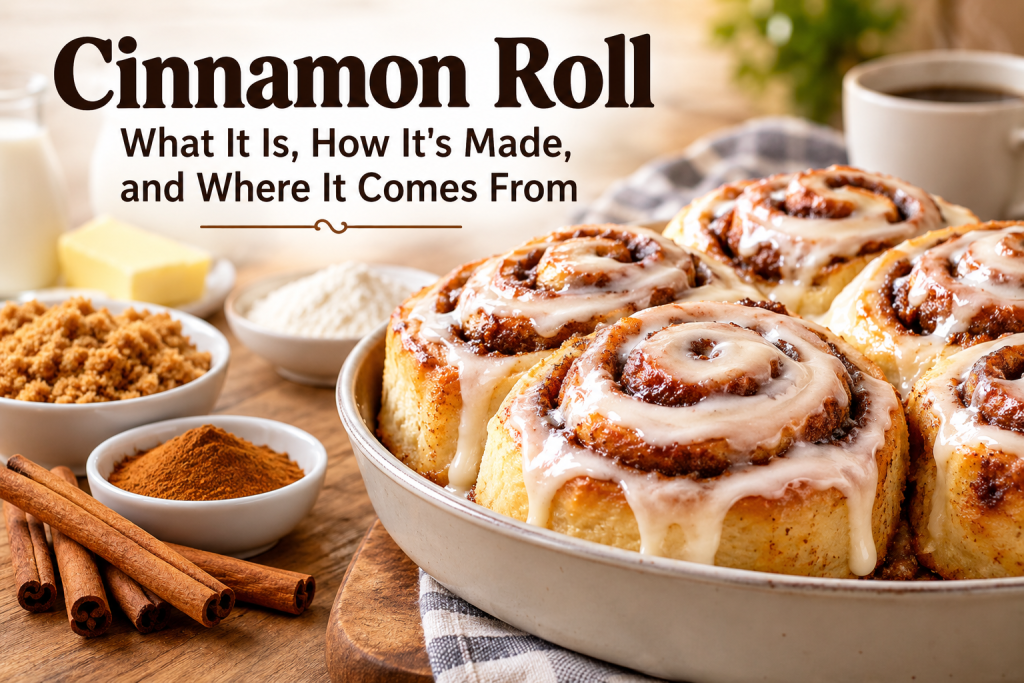
A cinnamon roll is a sweet baked pastry made from a yeast-leavened dough that is rolled out, spread with butter, cinnamon, and sugar, rolled into a log, sliced into spirals, and baked. It is typically topped with icing or glaze while still warm. The result is a soft, pull-apart roll with a sweet, spiced swirl throughout, served most often at breakfast or as a coffee-time treat.
What Is a Cinnamon Roll Made Of?
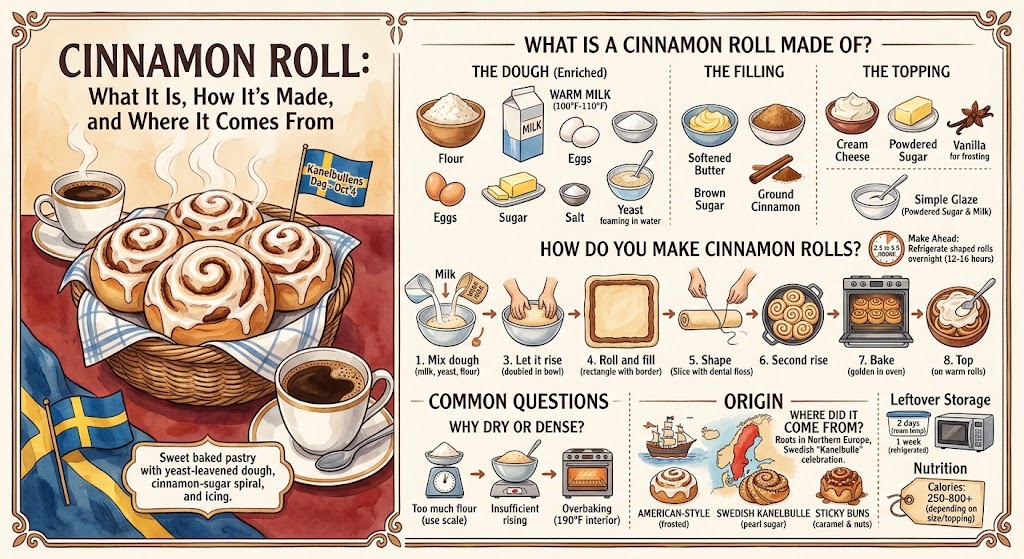
A cinnamon roll consists of an enriched dough, a cinnamon-sugar filling, and a sweet topping. “Enriched” means the dough contains fat, sugar, and often eggs or milk, which makes it softer and richer than plain bread dough.
The Dough
The base is a yeast dough made from flour, milk, sugar, butter, eggs, salt, and yeast. Bread flour or all-purpose flour both work, though bread flour produces a chewier crumb because of its higher protein content (about 12 to 14 percent, compared with roughly 10 to 12 percent in all-purpose flour). Warm milk, generally between 100°F and 110°F (38°C to 43°C), activates the yeast without killing it.
The Filling
The filling is a spreadable paste of softened butter, brown sugar, and ground cinnamon. Brown sugar is the usual choice because its molasses content keeps the filling moist and helps it form a gooey layer as it bakes. Most recipes use about 1 to 2 tablespoons of cinnamon for a full batch of 8 to 12 rolls.
The Topping
The most common topping is cream cheese frosting, made from cream cheese, butter, powdered sugar, and vanilla. A simpler glaze of powdered sugar and milk is also widely used, particularly in Scandinavian and bakery-style versions. Frosting is best spread over rolls that have cooled for 5 to 10 minutes so it softens and melts slightly without turning runny.
How Do You Make Cinnamon Rolls?
Making cinnamon rolls involves mixing and rising the dough, shaping the rolls, letting them rise again, and baking. Total time is usually 2.5 to 3.5 hours, most of it hands-off rising time.
- Mix the dough. Combine warm milk, yeast, and sugar, let the mixture foam for about 5 minutes, then add melted butter, eggs, salt, and flour.
- Knead. Work the dough for 6 to 8 minutes by machine or 8 to 10 minutes by hand until it is smooth and slightly tacky.
- Let it rise. Cover the dough and leave it in a warm place for 60 to 90 minutes, until it doubles in size.
- Roll and fill. Roll the dough into a rectangle about 16 by 12 inches and about 1/4 inch thick, then spread it evenly with the filling, leaving a small border along one long edge.
- Shape. Roll the dough tightly from the long edge into a log and slice it into 8 to 12 equal rounds. Unflavored dental floss or a sharp serrated knife gives cleaner cuts than a dull blade.
- Second rise. Place the rolls in a greased pan and let them rise for 30 to 45 minutes until puffy.
- Bake. Bake at 350°F to 375°F (175°C to 190°C) for 20 to 30 minutes, until golden brown and the center roll reaches about 190°F (88°C).
- Top. Spread frosting or glaze over the warm rolls.
Can You Make Them Ahead of Time?
Yes, cinnamon rolls can be prepared in advance because the shaped rolls tolerate cold storage well. The usual method is to shape and pan the rolls, cover them tightly, and refrigerate them overnight for up to 12 to 16 hours. The next morning, let them sit at room temperature for 30 to 60 minutes before baking. Unbaked rolls can also be frozen for up to a month.
Why Do Cinnamon Rolls Turn Out Dry or Dense?
Dry or dense cinnamon rolls usually result from too much flour, too little rising time, or overbaking. Each problem has a specific cause and a straightforward fix.
- Too much flour makes the dough stiff. Weighing flour on a kitchen scale, rather than scooping it by cup, prevents this.
- Insufficient rising leaves the rolls heavy. The dough should visibly double and spring back slowly when gently pressed.
- Overbaking dries out the interior. Pull the rolls when the center reaches about 190°F, even if the tops look pale.
- Cold or expired yeast results in weak rising. Checking that yeast foams during activation confirms it is alive.
Where Did the Cinnamon Roll Come From?
The cinnamon roll has roots in Northern Europe, and its exact origin is disputed. Sweet spiced buns appeared in Sweden and other Nordic countries after cinnamon and sugar became more affordable in the 18th and 19th centuries. The Swedish kanelbulle is the best-documented ancestor, and Sweden celebrates Kanelbullens Dag (Cinnamon Bun Day) each year on October 4.
Versions later spread with immigrants to North America, where the larger, frosting-topped style became standard. Regional variations include Danish kanelsnegle, Finnish korvapuusti (which is cut into wedges rather than slices), and the giant pastries associated with American mall bakeries.
What Are the Main Types of Cinnamon Rolls?
Cinnamon rolls vary mainly by size, topping, and dough style. The most common types are listed below.
- American-style: large, soft, and heavily frosted, usually with cream cheese icing.
- Swedish kanelbulle: smaller, less sweet, flavored with cardamom, and topped with pearl sugar instead of frosting.
- Overnight rolls: shaped in advance and baked fresh the next morning.
- Canned refrigerated rolls: pre-made dough sold in tubes, convenient but typically less rich than homemade dough.
- Sticky buns: a related pastry baked in a caramel or pecan layer that becomes the topping when the pan is flipped.
Common Questions About Cinnamon Rolls
What Is the Difference Between a Cinnamon Roll and a Sticky Bun?
A cinnamon roll is baked plain and then frosted, while a sticky bun is baked on top of a butter, sugar, and often nut mixture that caramelizes and is inverted onto a plate after baking.
How Should Leftover Cinnamon Rolls Be Stored?
Store them covered at room temperature for up to 2 days, or refrigerate for up to a week. Reheating for 10 to 15 seconds in a microwave restores softness, and a few minutes in a low oven works for a batch.
Are Cinnamon Rolls Vegan or Gluten-Free?
Traditional cinnamon rolls contain dairy, eggs, and wheat, so they are neither vegan nor gluten-free. Substitutions are possible, including plant-based milk and butter for vegan versions and gluten-free flour blends for celiac-safe versions, though texture typically differs from the original.
How Many Calories Are in a Cinnamon Roll?
A single large frosted bakery-style cinnamon roll commonly contains 400 to 800 calories or more, depending on size and topping. Homemade rolls of a moderate size typically fall between 250 and 400 calories.
Conclusion
A cinnamon roll is a yeast-raised pastry defined by its spiraled cinnamon-sugar filling and sweet icing, with a history stretching from Scandinavian bakeries to American breakfast tables. Consistent results depend on measuring flour accurately, giving the dough enough time to rise, and pulling the rolls from the oven before they dry out. Readers interested in the topic may want to explore how yeast dough rises, or compare cinnamon rolls with related pastries such as sticky buns and Danish pastries.