
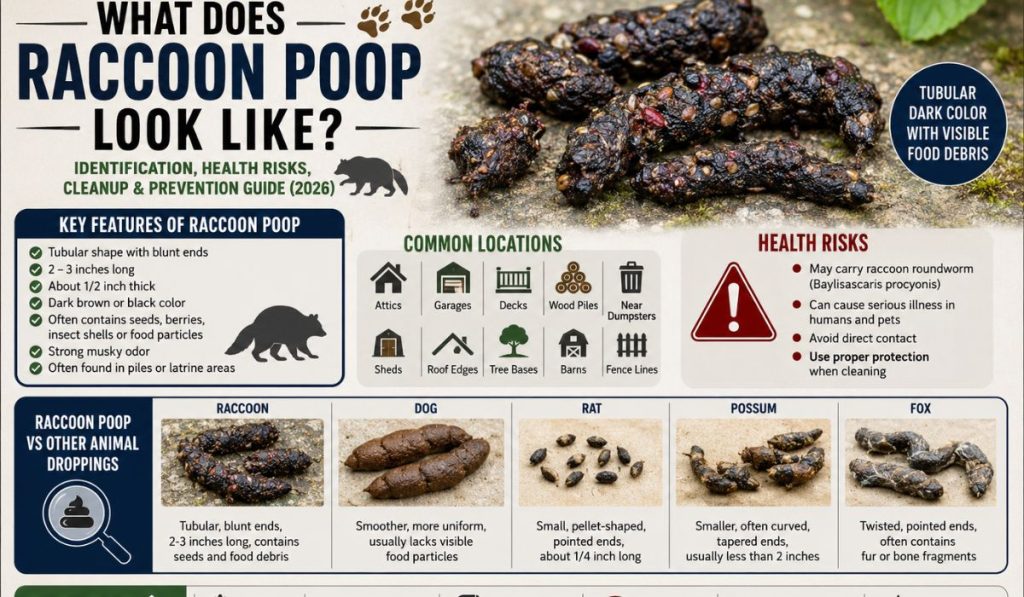
Raccoon droppings are often confused with dog feces, fox scat, or even large rodent waste. Knowing exactly what raccoon poop looks like helps homeowners, campers, landlords, gardeners, and property managers identify infestations early and reduce serious health risks connected to raccoon latrines. In 2026, pest control professionals across urban areas continue reporting increased raccoon activity near attics, garages, parks, sheds, dumpsters, and residential rooftops, especially around food waste and outdoor pet feeding stations.
Raccoon droppings are often confused with dog feces, fox scat, or even large rodent waste. Knowing exactly what raccoon poop looks like helps homeowners, campers, landlords, gardeners, and property managers identify infestations early and reduce serious health risks connected to raccoon latrines. In 2026, pest control professionals across urban areas continue reporting increased raccoon activity near attics, garages, parks, sheds, dumpsters, and residential rooftops, especially around food waste and outdoor pet feeding stations.
Raccoon poop is usually tubular in shape with blunt ends and a dark brown or black appearance. The droppings commonly measure between two and three inches long and roughly half an inch thick. Fresh raccoon feces often appear moist and shiny, while older droppings become dry, grayish, and crumbly over time. One distinguishing feature is the visible presence of undigested berries, seeds, insect shells, or food particles. Because raccoons are opportunistic omnivores, their waste reflects whatever food source is available nearby.
Homeowners frequently ask what does raccoon poop look like compared to dog poop. The difference is usually found in texture and contents. Dog feces are generally smoother and more uniform, while raccoon droppings contain visible debris from natural foods. Raccoon feces also tend to appear repeatedly in the same location because raccoons establish communal bathroom areas called raccoon latrines.
Common raccoon latrine sites include:
- Attics
- Wood piles
- Deck corners
- Garages
- Barn lofts
- Roof edges
- Tree bases
- Near dumpsters
- Fence lines
- Abandoned buildings
Many wildlife experts recommend immediate cleanup when raccoon droppings are discovered because raccoon feces can carry dangerous parasites. The most concerning is raccoon roundworm, scientifically known as Baylisascaris procyonis. Humans and pets may become infected if microscopic eggs are accidentally inhaled or ingested during cleanup. This is why identifying raccoon poop correctly is extremely important.
How To Identify Raccoon Poop Outdoors
People often notice raccoon droppings in gardens, lawns, patios, and near garbage cans. If you are wondering what does raccoon poop look like in the yard, the answer depends on diet and weather exposure. Fresh droppings appear dark and strongly odorous, while older droppings flatten and fade due to sun and rain exposure.
Several characteristics help distinguish raccoon poop outdoors:
- Cylindrical shape
- Strong musky smell
- Dark coloration
- Segmented texture
- Visible berry seeds
- Concentrated piles
- Frequent placement near climbing structures
Gardeners in urban areas increasingly report raccoon activity around compost bins and vegetable patches. In 2026, wildlife management teams in major cities including London continue advising residents to secure trash lids and remove outdoor food waste during warmer months, particularly during large summer tourism events when overflowing public bins attract wildlife activity.
Visitors attending seasonal events near Hyde Park or evening performances in the West End sometimes encounter urban raccoons near food disposal zones, particularly around temporary festival infrastructure and riverside gathering points. Wildlife officers recommend avoiding contact with animal waste in public green spaces.
What Does Raccoon Poop Look Like In The Attic
Attic infestations are one of the most common signs of residential raccoon activity. Homeowners may first detect scratching noises, insulation damage, or unpleasant odors before spotting droppings. Attic raccoon feces are usually clustered together because raccoons repeatedly use one section of the attic as a toilet area.
Signs of attic raccoon droppings include:
- Strong ammonia smell
- Dark tubular feces
- Ceiling stains
- Flattened insulation
- Paw prints nearby
- Accumulated waste piles
Professional removal is strongly recommended for attic contamination. Attempting to vacuum or sweep raccoon droppings without proper respiratory protection may release harmful particles into the air. Pest removal technicians typically use sealed disposal bags, enzyme disinfectants, industrial respirators, and insulation replacement procedures.
Raccoon Poop Vs Other Animal Droppings
Many people search online for raccoon poop identification because several animal droppings appear similar at first glance.
Raccoon Poop Vs Dog Poop
Dog feces are smoother and more uniform. Raccoon droppings often contain seeds and natural debris.
Raccoon Poop Vs Rat Droppings
Rat droppings are much smaller, usually pellet-shaped, and pointed at the ends.
Raccoon Poop Vs Possum Poop
Possum feces are smaller and curl slightly, while raccoon poop is thicker and more segmented.
Raccoon Poop Vs Fox Scat
Fox scat is often twisted with pointed ends and usually contains fur fragments from prey animals.
Is Raccoon Poop Dangerous To Humans
Yes, raccoon feces can present serious health hazards. The primary danger comes from parasite eggs and airborne contamination during improper cleanup. Children and pets are especially vulnerable because they may accidentally touch contaminated soil or surfaces.
Potential health concerns linked to raccoon feces include:
- Raccoon roundworm infection
- Bacterial contamination
- Respiratory irritation
- Parasite exposure
- Soil contamination
Wildlife safety campaigns launched across major tourist cities in 2026 continue emphasizing sanitation awareness around parks, riversides, and outdoor dining spaces. Near attractions such as The British Museum and South Bank, public waste management teams have expanded sealed disposal units during summer events to reduce urban wildlife scavenging activity.
How To Clean Raccoon Poop Safely
Never clean raccoon droppings without protective equipment. Experts recommend the following process:
- Wear disposable gloves
- Use an N95 respirator
- Spray droppings with disinfectant
- Avoid sweeping dry feces
- Carefully place waste into sealed bags
- Disinfect contaminated surfaces
- Wash clothing immediately after cleanup
For large infestations, professional wildlife remediation services are the safest option. Attic restoration may include insulation replacement, odor removal, and entry-point sealing.
Signs You May Have Raccoons Nearby
Understanding what does raccoon poop look like is only one part of identifying raccoon activity. Other common warning signs include:
- Noises at night
- Torn trash bags
- Damaged roof vents
- Paw tracks near gutters
- Missing pet food
- Disturbed gardens
- Scratches on fences
Raccoons are highly adaptable animals and increasingly thrive in suburban and urban environments. Areas with accessible food sources, water access, and hidden nesting locations are particularly attractive.
Travelers staying near busy tourism districts in London during summer festivals should avoid feeding wildlife around outdoor seating areas and riverside parks. Hotels near heavily visited districts such as Covent Garden frequently display public hygiene notices reminding guests to dispose of food waste properly during peak visitor periods.
Preventing Future Raccoon Problems
Reducing raccoon activity around your property usually involves eliminating food sources and blocking shelter access.
Helpful prevention methods include:
- Secure garbage bins tightly
- Remove outdoor pet food
- Seal attic openings
- Trim tree branches near roofs
- Install chimney caps
- Clean grills after use
- Protect compost containers
Property owners who consistently maintain sanitation and structural maintenance are less likely to experience repeat raccoon infestations.
Final Thoughts
If you have been asking what does raccoon poop look like, the key identifiers are tubular dark droppings with blunt ends, visible food debris, and repeated accumulation in the same location. Because raccoon feces may carry dangerous parasites, proper identification and safe cleanup are essential. Whether found in an attic, yard, garage, or garden, raccoon droppings should never be ignored.
Understanding the appearance, location, smell, and health risks connected to raccoon waste can help homeowners act quickly before infestations grow larger or contamination spreads further throughout the property.