
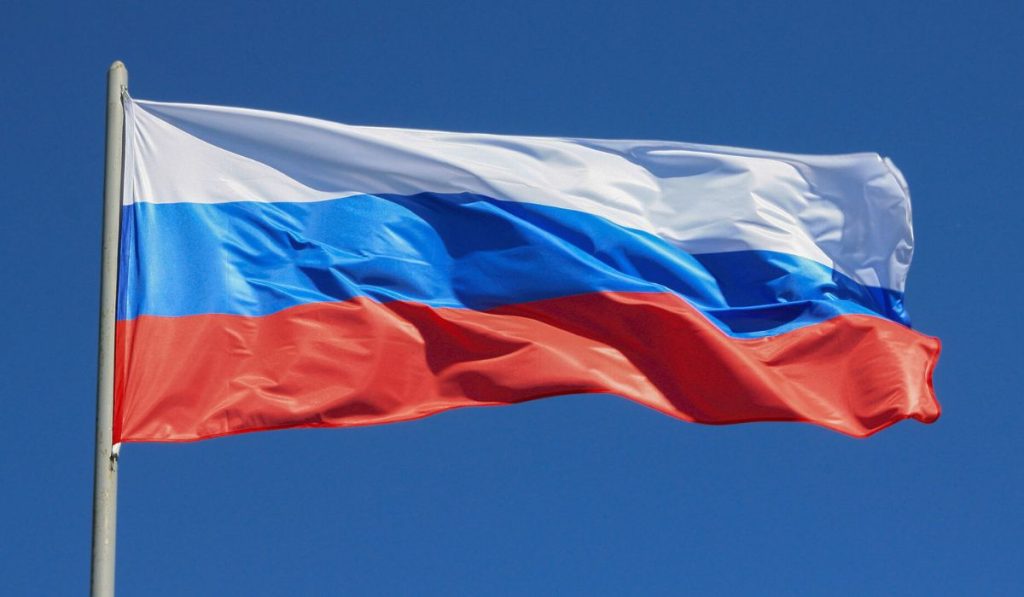
When you look at a country’s flag, you’re not just seeing colors on fabric—you’re seeing history, identity, and pride stitched together. The flag of Russia is no exception. With its simple yet striking horizontal stripes, it tells a story that stretches across centuries of change, power, and culture.
So, what do those colors really mean? Where did they come from? And why does this flag still matter today? Let’s dive into the full picture.

🌍 A Quick Introduction to the Russian Flag
The modern Russian flag is a tricolor made up of three horizontal bands: white on top, blue in the middle, and red at the bottom. It may look simple, but behind this design lies a deep historical journey.
Interestingly, this flag wasn’t always the symbol of Russia. It disappeared for decades and then made a dramatic comeback—almost like a character returning in the final act of a play.
🏛️ The Origins: Where Did It All Begin?
The roots of the Russian tricolor go back to the late 17th century during the reign of Peter the Great. Inspired by European naval flags—especially those of the Netherlands—Peter wanted Russia to modernize and connect with the West.
He introduced the white-blue-red design for Russian merchant ships. At that time, it wasn’t even the official national flag, but it planted the seed for what would later become a powerful national symbol.
⚓ Influence of European Designs
Why does the Russian flag resemble some European flags? That’s no coincidence.
Peter the Great traveled extensively across Europe and admired the Dutch maritime system. The Dutch flag influenced the layout, but Russia added its own identity through color arrangement and symbolism.
Think of it like borrowing a recipe but adding your own spices—it becomes something new, yet familiar.
🎨 What Do the Colors Represent?
The meaning of the colors has evolved over time, and there’s no single official explanation. However, several popular interpretations exist:
- White – Peace, honesty, and purity
- Blue – Faith, loyalty, and stability
- Red – Courage, strength, and love for the homeland
Some also connect the colors to historical regions or virtues tied to Russian identity. Either way, the symbolism resonates deeply with citizens.
👑 The Imperial Era and National Identity
By the 19th century, the tricolor became widely recognized as a national emblem. However, during the reign of Alexander II, an alternative black-yellow-white flag was introduced for official use.
This created confusion: one flag for the government and another for the people. Eventually, the white-blue-red tricolor regained popularity as the true representation of national unity.
🔴 The Soviet Shift: A Dramatic Change
Everything changed after the Russian Revolution.
The monarchy was overthrown, and a new government emerged—the Soviet Union. With it came a completely different flag: a red background with a hammer and sickle.
The tricolor disappeared from official use for over 70 years. It was replaced by a symbol of communism, representing workers and peasants rather than historical tradition.
🕊️ The Return of the Tricolor
Fast forward to 1991—the collapse of the Soviet Union.
As Russia transitioned into a new era, the tricolor flag was revived. It was officially adopted once again, marking a return to historical roots and a new beginning.
It’s almost like rediscovering an old family heirloom and realizing its value all over again.
🏟️ Where You’ll See the Flag Today
Today, the Russian flag is everywhere:
- Government buildings
- International sports events
- Military ceremonies
- Schools and public institutions
Whether it’s waved during celebrations or displayed in official settings, it serves as a strong symbol of national pride.
⚖️ Rules and Respect: Flag Protocol
Like many countries, Russia has strict guidelines for how the flag should be used:
- It must not touch the ground
- It should be displayed in proper order (white on top)
- It must be treated with respect at all times
These rules reflect how seriously the nation values its symbols.
🌐 Global Recognition and Influence
The Russian tricolor has influenced several other flags, especially in Slavic countries. Nations like Serbia and Slovakia use similar color schemes.
This shared palette is often referred to as Pan-Slavic colors, representing unity among Slavic peoples.
🎭 Cultural and Emotional Significance
For many Russians, the flag is more than a symbol—it’s a feeling. It represents:
- A complex history filled with triumphs and struggles
- A sense of belonging
- Pride in cultural heritage
Imagine it like a family photo album—each color a page, each stripe a chapter.
🧠 Common Misconceptions
There are a few myths surrounding the Russian flag:
- “It’s always been the national flag” – Not true; it disappeared during the Soviet era.
- “The colors have one fixed meaning” – Interpretations vary widely.
- “It copied other flags completely” – While inspired, it evolved into a unique symbol.
Understanding these nuances helps us appreciate the flag more deeply.
🔮 The Flag in Modern Times
In today’s world, the Russian flag continues to evolve in meaning. It represents not just history, but also current identity and future aspirations.
As global politics shift and cultures interact, the flag remains a constant—a visual anchor in a changing world.
🧾 Conclusion
The flag of Russia is far more than a simple tricolor. It’s a living symbol that has traveled through empires, revolutions, and rebirths. From the ambitions of Peter the Great to the fall of the Soviet Union, it has witnessed history unfold in dramatic ways.
And yet, it still stands—simple, bold, and meaningful.
Next time you see it, ask yourself: what story does it tell you?
❓ FAQs
1. What do the colors of the Russian flag mean?
The colors are commonly interpreted as white for peace, blue for faith, and red for courage, though meanings can vary.
2. When was the current Russian flag adopted?
It was officially re-adopted in 1991 after the collapse of the Soviet Union.
3. Did Russia always use this flag?
No, it was replaced during the Soviet era by a red flag with communist symbols.
4. Who introduced the tricolor design?
Peter the Great introduced the design in the late 17th century.
5. Why do other countries have similar flags?
Many Slavic nations use similar colors due to shared cultural and historical connections known as Pan-Slavic colors.